
Many people assume JADU (Junior accessory dwelling units) are smaller ADUs or another name for a garage conversion.
In reality, junior accessory dwelling units follow a different set of rules, serve different purposes, and work best in very specific situations.
If you’re a homeowner exploring housing options or a real estate agent trying to better understand accessory dwelling units, this guide breaks it all down in plain language.
- A junior accessory dwelling unit is not just a smaller ADU. It follows different rules and serves a different purpose.
- Junior accessory dwelling units must be inside the main house and are usually limited to about 500 square feet in most areas.
- A separate exterior entrance and a kitchenette, not a full kitchen, are typical requirements.
- Garage conversions may qualify in some areas, but never assume without checking local rules.
- Junior accessory dwelling units often work best for family housing, caregivers, or bringing space up to code, not full investment rentals.
- Costs depend more on the condition of the space than the size of the unit.
- Local planning departments matter. Rules can vary dramatically from one city to the next.
Disclosure: This post may contain affiliate links, meaning I can earn commissions. If you decide to purchase through my links, it is at no cost to you.
What Is a Junior Accessory Dwelling Unit?
A junior accessory dwelling unit is a small legal living unit created inside an existing single-family home.
In most jurisdictions, a junior accessory dwelling unit is limited to 500 square feet or less.
▶ It must be contained entirely within the walls of the main house.
This means it is not a detached structure and does not take up additional yard space.
Junior accessory dwelling units are typically created by converting existing areas such as:
- Bedrooms
- Bonus rooms
- Basements
- Sometimes attached garages
▶ The key concept is that a junior accessory dwelling unit uses space that already exists within the home’s footprint.
Related Articles 📚
Core Characteristics of a Junior Accessory Dwelling Unit
A junior accessory dwelling unit is more than just extra living space.
▶ It is considered a legal dwelling unit, which means it must meet specific requirements.
Most junior accessory dwelling units include:
- A separate exterior entrance, allowing independent access
- A kitchenette, rather than a full kitchen
- Defined living space intended for independent occupancy
The kitchenette usually includes a sink, counter space, and limited cooking appliances. Full-size ranges and ovens are often restricted, depending on local code.
▶ Another important distinction is that a junior accessory dwelling unit is designed to function independently while still being part of the main house.
This balance is what separates a JADU from simply renting out a room.
| Requirement | Typical Rule |
|---|---|
| Max size | ~500 sq ft |
| Exterior entrance | Required |
| Kitchen | Kitchenette only |
| Bathroom | May be shared |
| Utilities | Often shared |
| Parking | Often none required |
What does a JADU look like?
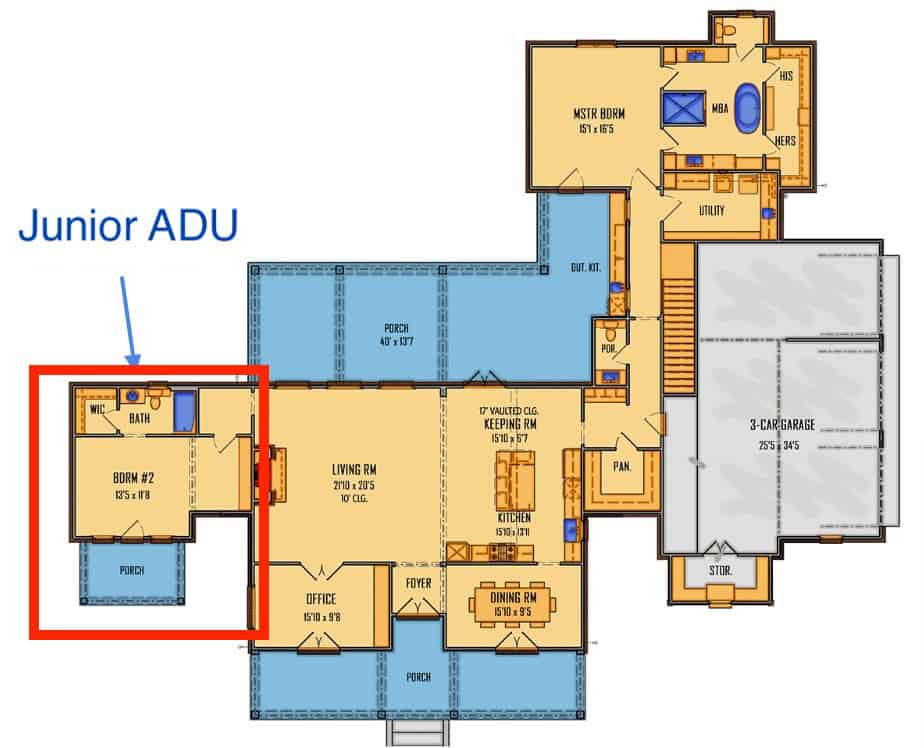
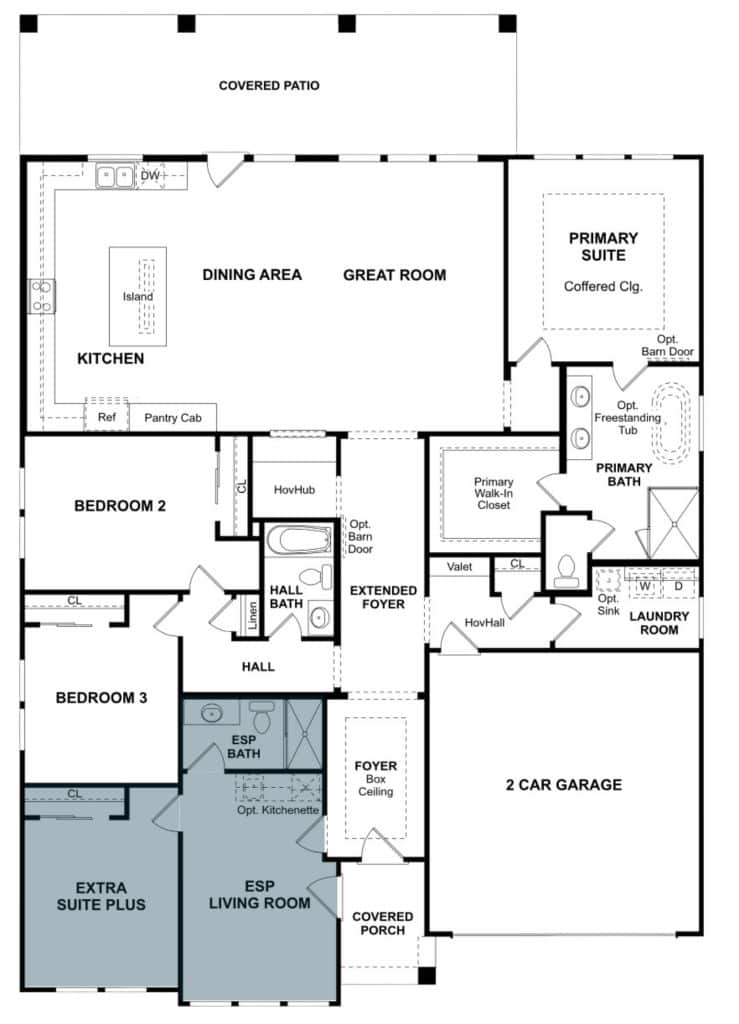
Here are a few examples of junior accessory dwelling units.
This is a smaller Junior ADU. It has its own entrance and porch. There is even a space where the kitchenette could go.
This is a larger junior ADU and has a living room space.
Junior Accessory Dwelling Unit vs ADU vs Renting a Room
Understanding the differences between these options helps clarify when a junior accessory dwelling unit makes sense.
Junior accessory dwelling units fill a specific niche. They provide more structure than a room rental without the cost and complexity of a full ADU.
| Feature | Renting a Room | Junior Accessory Dwelling Unit | ADU |
|---|---|---|---|
| Permit required | No | Yes | Yes |
| Located inside main home | Yes | Yes | Sometimes |
| Separate exterior entrance | No | Yes | Yes |
| Kitchen type | Shared | Kitchenette | Full kitchen |
| Size limit | No | Usually 500 sq ft | Larger allowed |
| Owner occupancy required | No | Often | Rarely |
| Rental flexibility | Limited | Moderate | High |
Pros and Cons of a Junior Accessory Dwelling Unit
Junior ADUs can be a great solution in the right situation, but they come with tradeoffs.
Looking at the pros and cons separately helps clarify whether a junior ADU aligns with your goals.
| Advantage | Why It Matters |
|---|---|
| Lower cost than a full ADU | Makes adding a unit more affordable without new construction |
| Uses existing space | Avoids setbacks, lot coverage limits, and yard loss |
| Minimal construction in some cases | Reduces disruption and speeds up the project |
| Faster permitting in many areas | Shorter timelines and fewer approval hurdles |
| Fewer utility requirements | Lowers infrastructure and connection costs |
| Often no additional parking required | Helps projects move forward in dense areas |
| Kitchenette instead of full kitchen | Safer option for aging parents or vulnerable occupants |
| Close proximity to main home | Easier caregiving and daily check-ins |
| Flexible use | Works well for family, caregivers, or long-term guests |
| Limitation | Why It Matters |
|---|---|
| Size limited to about 500 sq ft | Restricts layout and storage options |
| Kitchen restrictions | Not ideal for occupants who want a full cooking setup |
| Attached to main house | Less privacy than a detached unit |
| Noise transfer | Can be an issue with thin walls or different schedules |
| Shared utilities | May create billing concerns |
| Shared HVAC | Can lead to thermostat conflicts |
| Safety concerns | Fires or accidents affect the main home |
| Owner-occupancy rules | Limits long-term rental or investment use |
Why a Junior Accessory Dwelling Unit Is Not Automatically a Garage Conversion
One of the most common misunderstandings about junior accessory dwelling units is the assumption that any garage conversion qualifies.
A junior accessory dwelling unit is not defined by the room being converted. It is defined by how that space is regulated under local code.
In others, only existing livable space, such as a bedroom or bonus room, is allowed.
Detached garages are usually treated differently and are more likely to fall under standard ADU regulations rather than junior ADU rules.
This means two similar homes in different cities can have very different outcomes. Garage eligibility is one of the most important details to confirm early in the planning process.
| Space Type | May Qualify as JADU? | Notes |
|---|---|---|
| Bedroom | Yes | Must meet access rules |
| Bonus room | Yes | Common option |
| Basement | Sometimes | Depends on local code |
| Attached garage | Sometimes | Jurisdiction-specific |
| Detached garage | Usually no | Often treated as ADU |
| Carport | Rare | Highly regulated |
Parking and Access Requirements
Junior accessory dwelling units often do not require additional parking spaces. This is one reason they appeal to homeowners in areas with strict parking rules.
However, converting a garage or carport can trigger replacement parking requirements.
These requirements are separate from the junior ADU itself and are tied to the loss of existing parking.

It’s important to distinguish between parking required for the unit and parking required to replace converted space.
Access rules also matter. Junior accessory dwelling units typically require their own exterior entrance, and that entrance must meet local safety and egress standards.
When a Junior Accessory Dwelling Unit Makes the Most Sense
Junior accessory dwelling units work best in specific situations.
They are commonly used for multigenerational living, such as housing aging parents, adult children, or caregivers who need privacy without full separation.
A Junior ADU can be a good solution for bringing unpermitted spaces up to code. Many homes already include converted basements or bonus rooms that are not legally recognized. A junior accessory dwelling unit can legitimize that space.
In some cases, junior accessory dwelling units are paired with detached ADUs to create flexible living arrangements without building multiple fully independent units.
| Situation | Good Fit for JADU? | Why |
|---|---|---|
| Aging parent | Yes | Privacy + proximity |
| Adult child | Yes | Independent living |
| Caregiver housing | Yes | On-site support |
| Long-term rental | Sometimes | Depends on rules |
| Short-term rental | Sometimes | Often restricted |
| Full investment property | Probably not | Owner-occupancy limits |
Common Junior ADU Issues and How to Avoid Them
Junior ADUs can work really well, but most problems come from small oversights. Here are the most common ones and how to plan around them.
- Noise transfer between spaces
Use a solid-core or exterior-rated door between the JADU and the main home. Add insulation to shared walls. There are options that work without removing drywall. - Lack of temperature control
Shared HVAC often leads to thermostat conflicts. Zoned HVAC systems or a mini-split give the occupant independent control, which matters even more when the unit is rented to someone outside the household. - Poor ventilation in the kitchenette
Small spaces need proper ventilation to handle heat, moisture, and odors from cooking. - Tripped breakers from kitchen appliances
Mini fridges, hot plates, microwaves, and other appliances can overload circuits if electrical capacity isn’t planned correctly. - No access to the electrical panel
Tenants typically won’t have access to the main electrical panel, which can make simple issues harder to resolve. - Utility sharing concerns
Shared utilities can create tension over costs, especially electricity and HVAC usage, if expectations aren’t clear.
Smart Add-Ons to Consider in a New Construction Junior ADU
If a junior ADU is part of a new construction home, you have more flexibility to add small features that improve livability and reduce future issues.
- Zoned HVAC or a mini-split system
Allows separate temperature control without affecting the main house. - Dedicated electrical sub-panel for the JADU
Makes maintenance easier and reduces dependency on the main panel. - Sound-rated doors and insulated shared walls
Much easier and cheaper to install during construction. - Separate doorbell or clearly defined entry features
Helps establish independence and avoids confusion. - Thoughtful placement of switches and outlets
Small design choices can greatly improve daily use in a compact space.
Cost Expectations
The cost of building a junior accessory dwelling unit varies widely.
Lower-cost projects often involve bringing an existing space up to code, such as updating electrical systems, improving access, or adding a kitchenette.
Higher-cost projects typically involve garage conversions or structural work. Foundation upgrades, moisture control, and insulation can significantly increase costs.
Overall, cost is driven more by condition and scope than by square footage alone.
| Project Type | General Cost Range |
|---|---|
| Bring space up to code | Lower |
| Bedroom conversion | Low–Mid |
| Garage conversion | Mid–High |
| Structural changes | High |
Why Local Rules Matter
Junior accessory dwelling units are governed by a combination of state and local regulations. Some state laws may set a baseline, cities and counties interpret and enforce the rules differently.
This means homeowners with similar properties can face very different requirements depending on where they live.
Before starting a junior accessory dwelling unit project, it’s always smart to:
- Review your city’s JADU guidelines
- Contact the local planning department
- Confirm interpretations before designing or permitting
Final Thoughts
A junior accessory dwelling unit is not just a smaller ADU. It is a distinct housing option with its own strengths and limitations.
When used in the right situation, it can add flexibility, support family needs, and make better use of existing space.
When misunderstood, it can lead to frustration and unexpected restrictions.
Understanding the difference is what makes a junior accessory dwelling unit work.
Frequently Asked Questions
Do junior accessory dwelling units increase property value?
In many cases, yes. A junior accessory dwelling unit can add functional living space and flexibility, which may appeal to buyers, but value impact varies by market and execution.
Can a junior ADU be sold separately from the main home?
No. A junior accessory dwelling unit cannot be sold separately. It remains part of the primary property.
Can a junior ADU have its own utility meters?
Typically no. Junior accessory dwelling units usually share utilities with the main house, though requirements vary by jurisdiction.
Are junior accessory dwelling units allowed in all zoning districts?
No. Even where state law allows them, local zoning rules and overlays may limit where junior accessory dwelling units are permitted.
Author

Image Source: Canva, Pexels, Pixabay, Open Verse, Unsplash